Smallest Fitness Tracker 2017 Continuous Heartrate


Dominic Preston / Foundry
Fitness trackers are an excellent alternative to a proper smartwatch: they're simpler, cheaper, and usually have much better battery life, so you don't have to remember to charge them every day.
Despite that, the best fitness trackers still pack all the same activity tracking tech as their more expensive cousins. Any fitness tracker will record your steps, check your heartrate, and track your exercise – while the latest models can monitor your sleep and stress levels too.
The big brand is obviously Fitbit, but we review fitness trackers from a variety of companies – and in fact often find that rivals deliver better value, with similar tracking prowess for a lower price. You might also want to consider Withings, which makes trackers including some of the best health tech on the market, packed into devices that still look like regular analogue watches.
Every tracker in this ranking has been reviewed by the Tech Advisor team, and you can click through to our full reviews for more details on why they've made the cut. We're always reviewing new models too, so check back for an updated ranking if nothing takes your fancy right now.
If you are looking for something with a little more functionality, why not check out our best smartwatches roundup too.
Best fitness trackers 2022
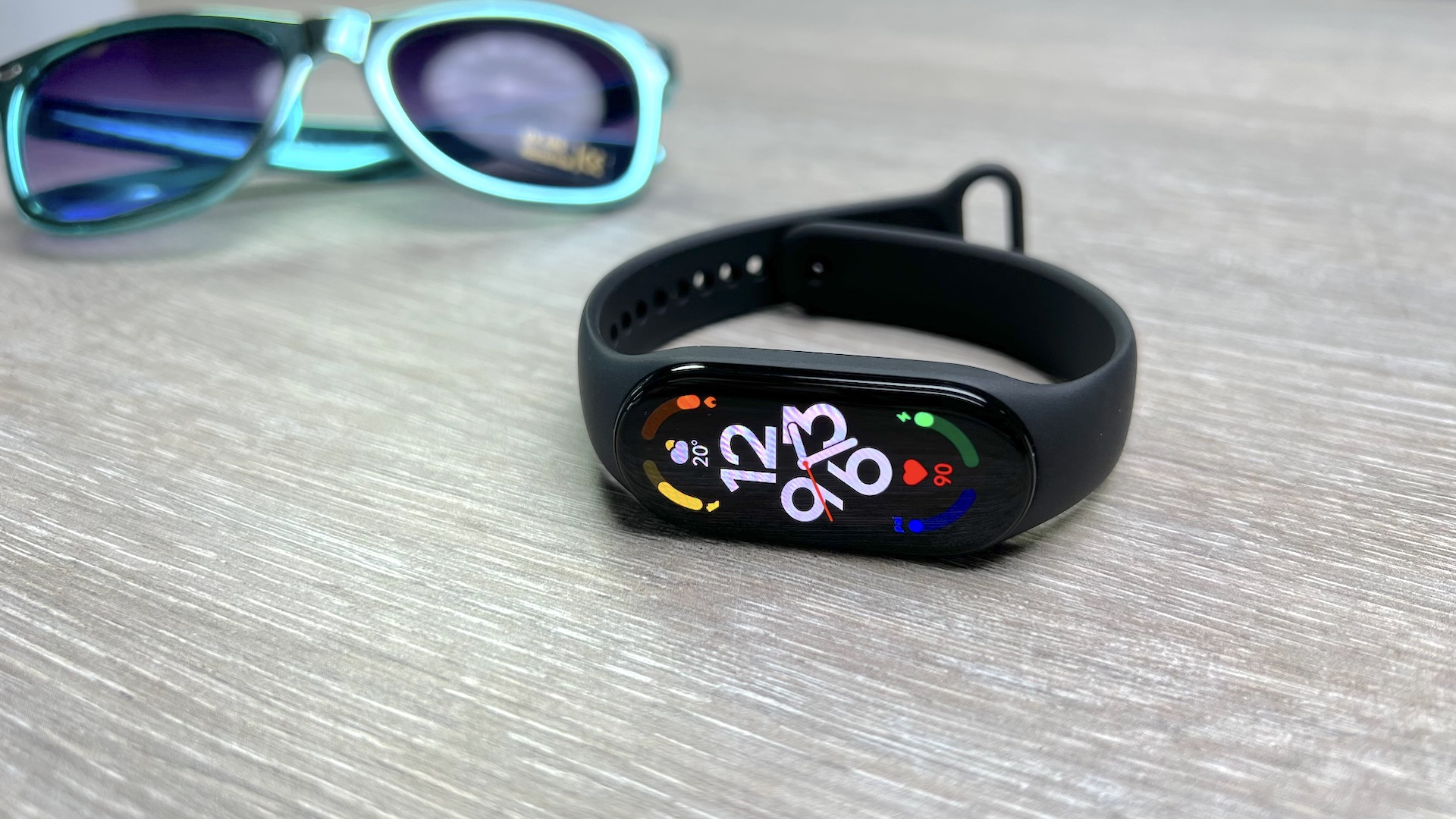
1. Xiaomi Mi Band 7 – Best fitness tracker
Pros
- Feature-packed
- All-day heart rate, blood oxygen and stress tracking
- Support for 120 types of exercise
- Large always-on display
Cons
- Always-on display comes at a big cost to battery
- Not the smartest wearable
- No built-in GPS
The Xiaomi Mi Band 7 is the best fitness tracker around, with a tempting price tag and an impressive array of sensors to track your health, fitness, and workouts.
The large always-on display is a particularly nice addition, helping showcase the vivid watch faces on offer while making it easier to read text at a glance, though the always-on tech comes at a heavy cost to overall battery life.
Fitness tracking includes all-day SpO2 monitoring, new workout metrics (including VO2 Max), and the ability to track more workouts than ever before.
The lack of built-in GPS may irk fitness fanatics, but this is a great little inexpensive tracker for keeping an eye on your general health and fitness.
Read our full Xiaomi Mi Band 7review
2. Fitbit Charge 5 – Best Fitbit

Pros
- Top fitness features
- GPS
- Colour display
Cons
- Occasionally laggy
- Some features missing
The Charge 5 is easily Fitbit's best tracker, which is enough to make it a safe choice for anyone looking for an activity band.
It covers all the basics – tracking steps, distance, calories burned, hourly activity, heart rate, swim-tracking and advanced sleep; not to mention it has most of the company's exclusive top-end exercise features too, including Active Zone Minutes.
Its built-in GPS and health measurements mean it closely matches the more expensive Fitbit Versa 3 smartwatch too, though bear in mind that the most comprehensive tracking features are locked behind the paid Fitbit Premium plan.
Our only complaints are very occasional performance stutters, the removal of an altimeter (to count floors climbed) and a few features that Fitbit has been slow to add, but those shouldn't put you off grabbing the Charge 5, as it's constantly getting improved upon (thanks to frequent software updates from Fitbit).
If you don't mind a monochrome display, you can also always check out the older Charge 4 and save some money too.
Read our full Fitbit Charge 5review
3. Withings Move – Best design

Pros
- Elegant design
- Well-rounded app
- 18-month battery life
Cons
- Limited feature set
- No continuous heart rate
When it comes to design, the Withings Move is so classic and simple that it could pass as an everyday watch. It has the longevity of one too, using a standard watch battery that will last for a whopping 18 months.
On the fitness tracking side, the companion Health Mate app does almost everything you need it to and more, combining basic fitness tracking with sleep tracking too.
If you love the sound of the Move but want that little bit extra, check out the Move ECG too, which takes the same design but squeezes in an electrocardiogram sensor.
Read our full Withings Movereview
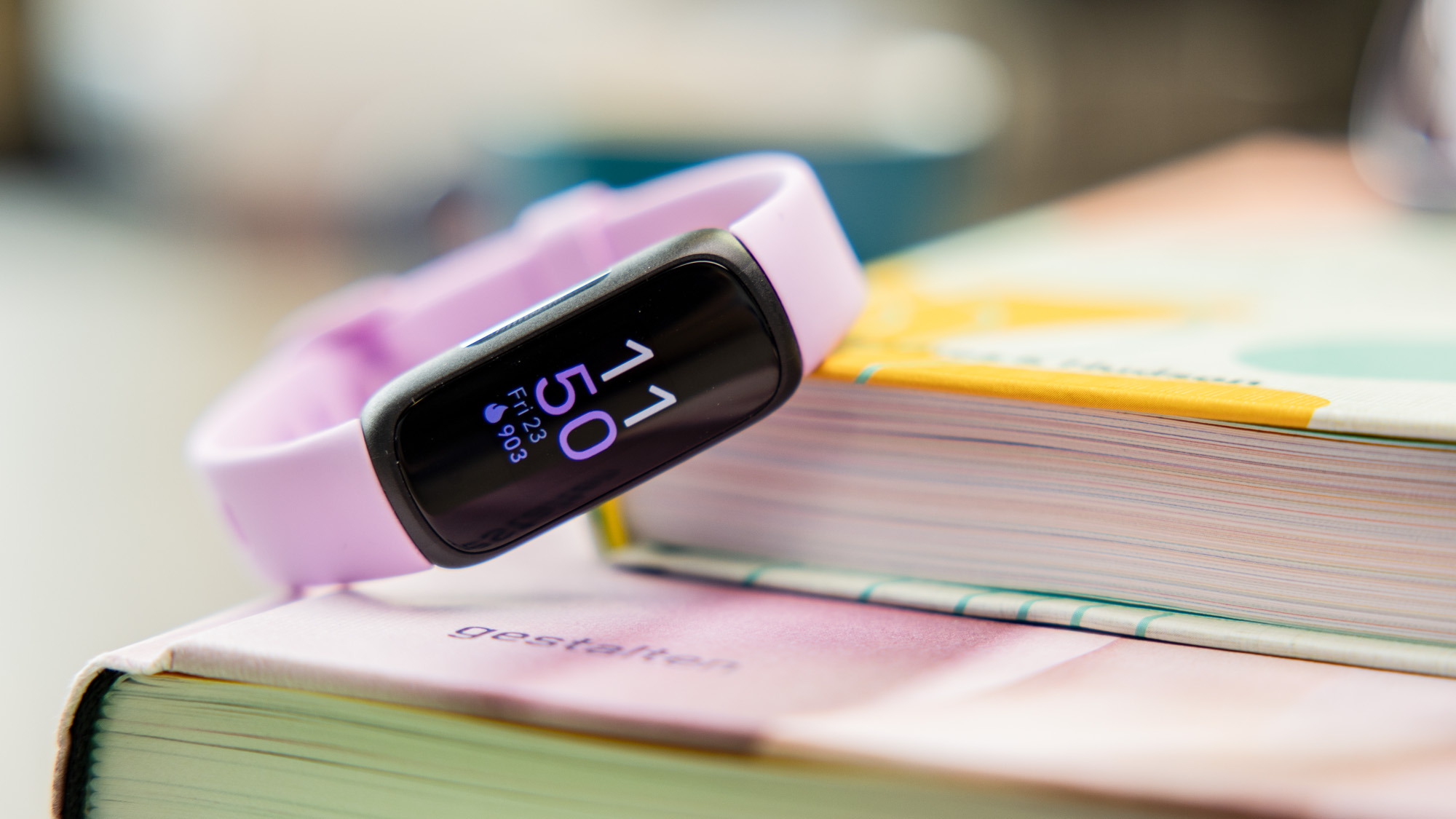
4. Fitbit Inspire 3 – Cheapest Fitbit
Pros
- Always-on colour screen
- Stylish & comfortable
- Comprehensive tracking
- Good battery life & charging
Cons
- Tiny screen
- Premium needed for some features
- Short charging wire
- No GPS
The Inspire 3 is the cheapest model in the current Fitbit line-up, making it an excellent entry point to tracking.
It's still more expensive than rivals like the Xiaomi Mi Band 7, but Fitbit's software experience and ecosystem are both excellent, so for some it may be worth paying a little extra – though paying more for a smaller display does sting a little.
It helps that you get up to 10 days of battery life (though a little less if you use the new always-on display feature), 24/7 heart rate monitoring now bolstered by SpO2 data, and sleep tracking. Just bear in mind that there's no built-in GPS support, and that, as with all Fitbits, you'll need to subscribe to the paid Fitbit Premium plan to get every bit of data out of it.
Read our full Fitbit Inspire 3review
5. Withings ScanWatch – Best health tracking

Pros
- Elegant design
- Well-rounded app
- Great battery life
Cons
- No GPS
- No continuous heart rate
Aside from a lack of GPS, Withings' ScanWatch is a compelling hybrid tracker, with a classic design and rich tracking capabilities.
The name relates to its ability to more accurately get a read on your heart health than any other tracker here, albeit for a premium that makes it more of a niche proposition.
AFib detection, an SpO2 sensor, and detection of breathing disturbances like sleep apnea are smart inclusions, while the small PMOLED display grants some degree of smartwatch-like functionality on top of its fitness-tracking skillset.
If you can spend a little more, the ScanWatch Horizon offers the same excellent health features in a heftier dive watch design.
Read our full Withings ScanWatchreview
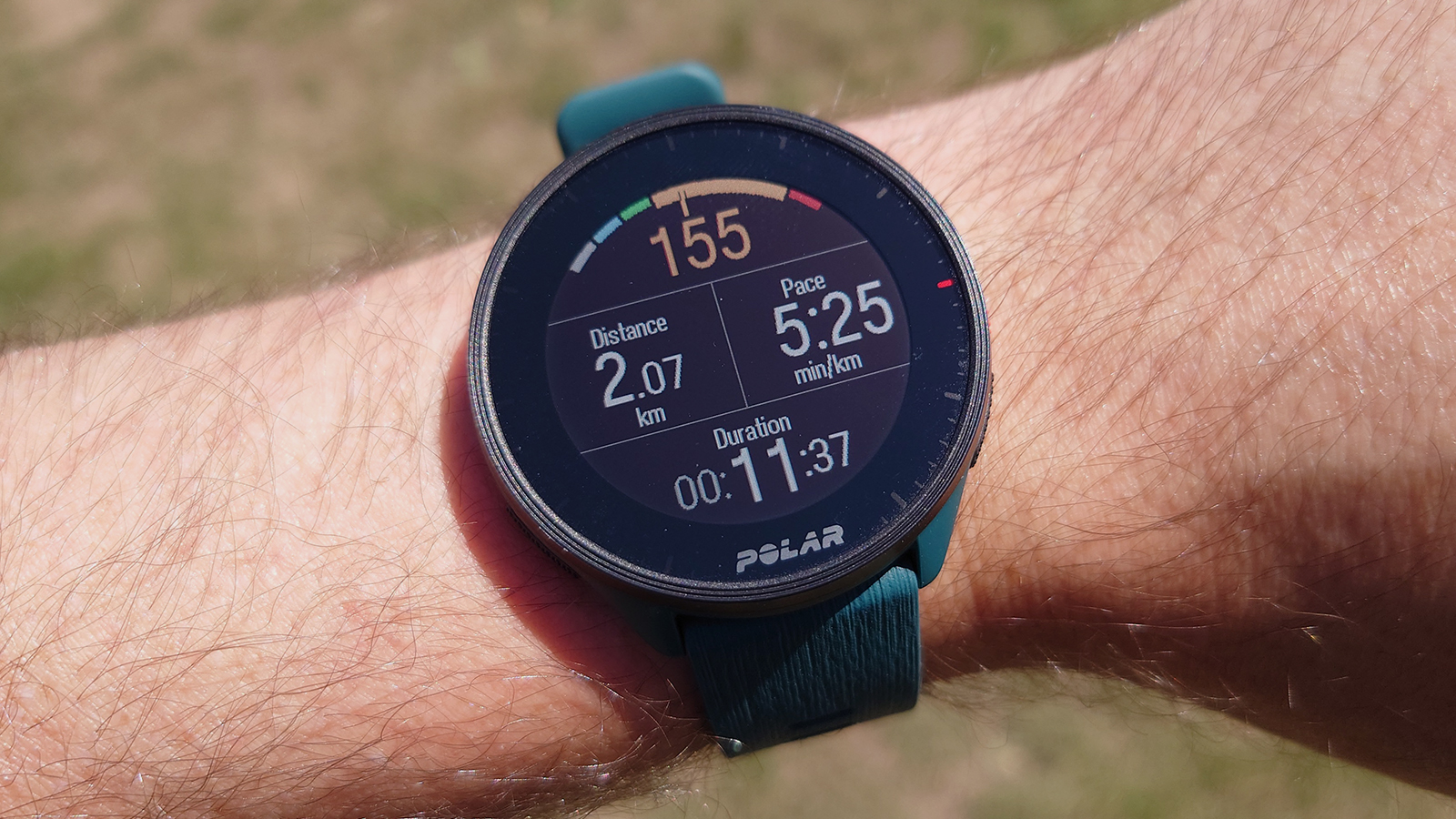
6. Polar Pacer – Best for runners
Pros
- Very comfortable
- Excellent battery life
- Accurate tracking with GPS
Cons
- Notification experience irks
- Manual syncing to app
- No on-board music storage
If you want a running watch that lasts several days on a charge, tracks your workouts effortlessly, spits out insightful data, and won't bug you with notifications, the Polar Pacer is it.
The Pacer supports a variety of exercise types but the focus is on running, with GPS tracking and a post-workout 'running index' to let you know how you've performed across a variety of metrics.
If you're trying to get into running, or even if you're already hitting the trails, the Pacer will prove an excellent addition to your kit with strong battery life, a superbly readable display, lightweight construction, and the smarts to show you how you are performing and to help you improve.
Read our full Polar Pacerreview
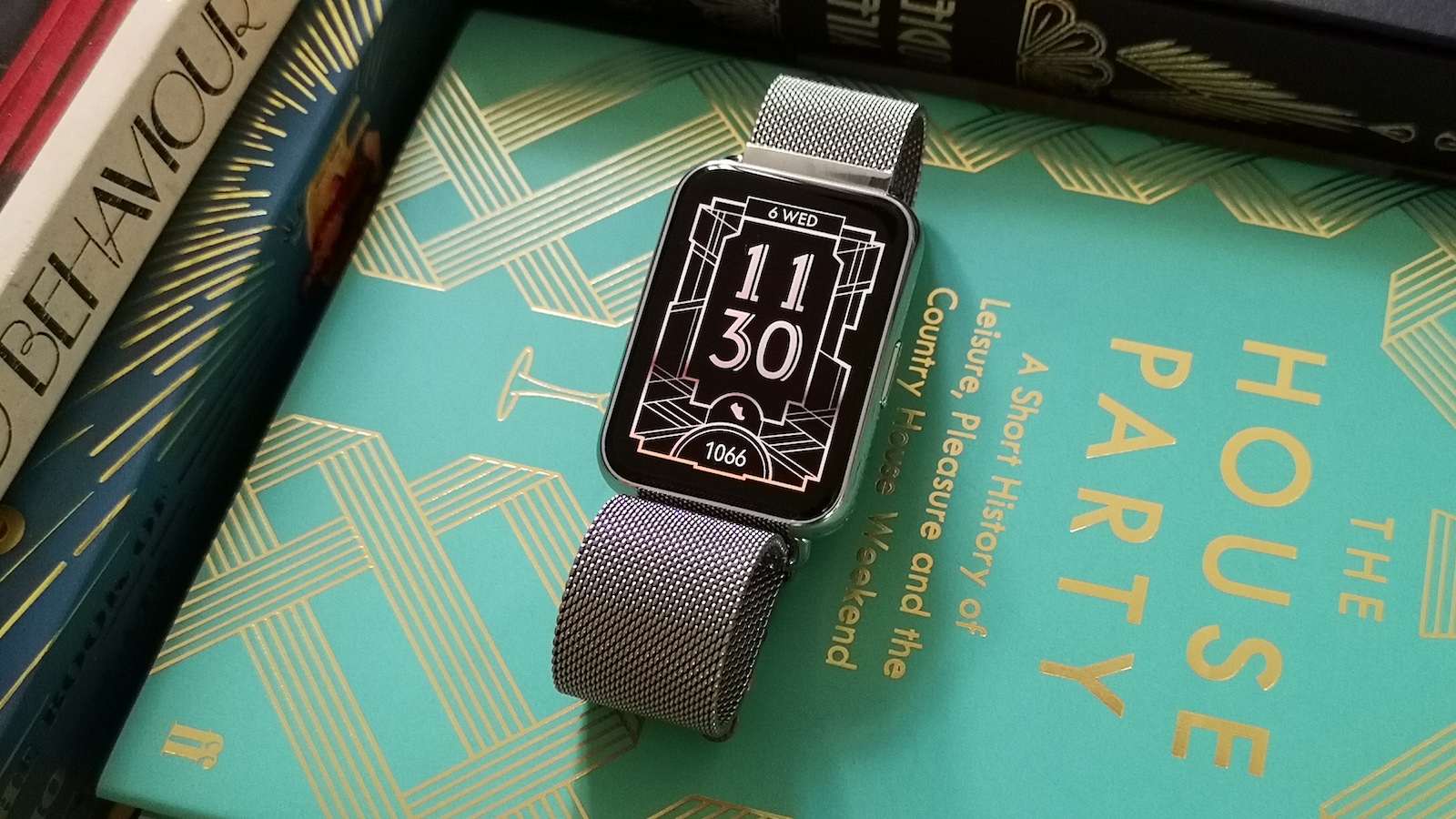
7. Huawei Watch Fit 2 – Smartwatch substitute
Pros
- Slick, low-profile design
- Responsive and easy-to-read display
- Supports calling via Bluetooth
- Huawei Health app is easy to navigate
Cons
- No NFC
- Milanese mesh wrist strap is a little loose
- Pricey for a tracker
The Huawei Watch Fit 2 is a great-looking and easy-to-use wearable that sits somewhere between a smartwatch and a fitness tracker.
It's geared towards health tracking, but compared to simpler trackers it comes with some useful extra features such as the phone locator and Bluetooth calling.
You still get a lot of the benefits of trackers though, including a weeklong battery life and a slim, low-profile design.
Getting the best of both worlds affects the price though, and this is essentially expensive for a fitness tracker, but cheap for a smartwatch.
Read our full Huawei Watch Fit 2review
8. Fitbit Ace 3 – Best for kids

Pros
- In-app Parent and Kid Views
- Hardy, colourful design
- Family challenges
Cons
- Underpowered compared to adult Fitbits
- May not appeal to every kid
The Fitbit Ace 3 is built to suit childrens' rough-and-tumble lifestyle, providing both kids and parents with simple but insightful activity and sleep tracking data.
The Ace 3 serves as a way to motivate kids to get more active, but in a roundabout way, could also incentivise the whole family to get fitter together (provided everyone involved has a Fitbit of their own to wear).
Older kids might want to look for a tracker with a little more oomph, however, as the Ace 3 offers a cut-down range of fitness and notification features compared to Fitbit's 'adult' trackers. It counts steps, logs Active Minutes, and monitors basic sleep patterns, but lacks heart-rate tracking.
Read our full Fitbit Ace 3review
9. Honor Band 6 – Best on a budget

Pros
- Large display
- Stress & sleep tracking
- Excellent battery life
Cons
- Only 10 exercise types
- No GPS or NFC
- Inconsistent SpO2 measurements
The Honor Band 6 is one of the cheapest fitness trackers around, even coming in cheaper than Xiaomi's latest.
Despite that you get a large colour display, 5 ATM water-resistance, both stress and sleep tracking, and a brilliant two-week battery life.
You'll have to put up with a limited selection of exercises, and there's no GPS or NFC, but at this price that won't matter much.
Read our full Honor Band 6review
10. Fitbit Luxe – Fitbit, but fashion
Pros
- Fitness and wellness features
- Colour touchscreen
- Fashion accessories
Cons
- Average battery life
- Inspire 2 is better value
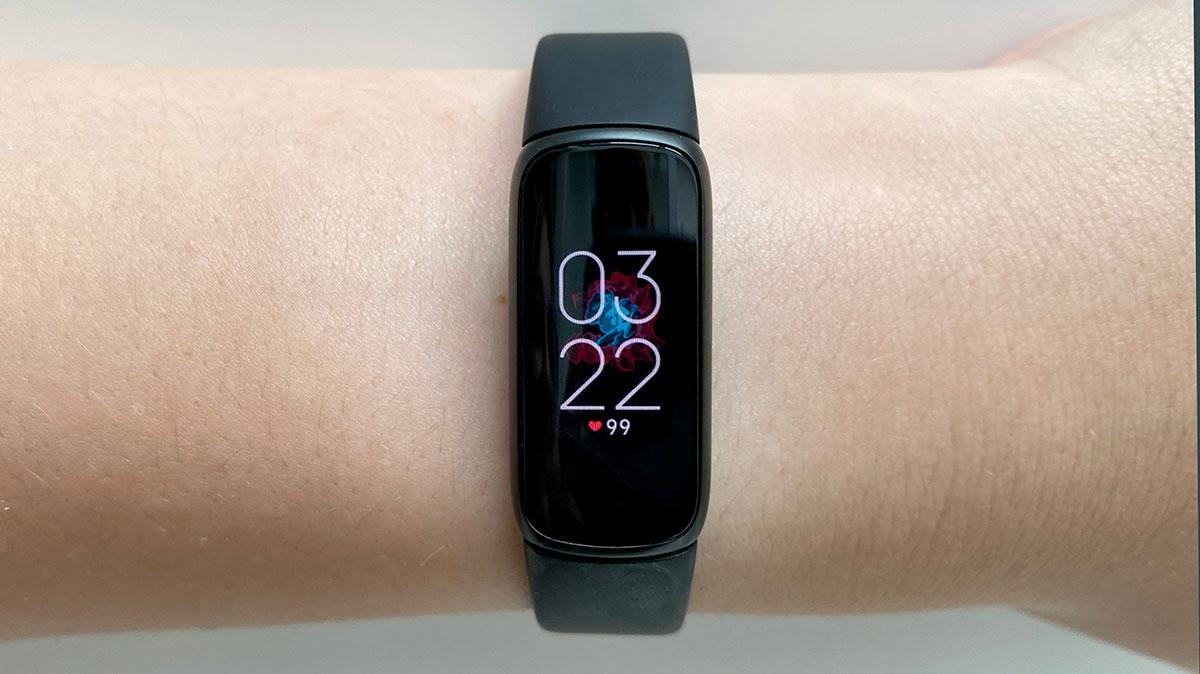
The Fitbit Luxe is essentially an Inspire 2 with a colour AMOLED display. It features the same tracking tech and smart features as its cheaper cousin, but at a higher price to accommodate the full colour screen.
It's designed to look the part in more ways than one though. The metal body is a step up in sturdiness from the Inspire 2, and it not only comes in a variety of colours but also features a whole host of different swappable bands (sold separately, of course).
That makes this the Fitbit for anyone who cares about style as much as substance, though either the Inspire 2 or Charge 5 will do better if performance is your priority.
Read our full Fitbit Luxereview
Buying advice for the best fitness trackers
1.
What is a fitness tracker?
Fitness trackers help you measure and log a myriad of activities each day; from a simple step count to weights sessions, swimming and more. Advanced models include sleep tracking, stress detection, and can even help monitor specific health problems.
Some users will want something that counts steps and doesn't require frequent charging, others might be in the market for a new marathon companion.
Do you want to be able to log your routes using integrated GPS or is tethered GPS (pulling location data from your phone in real-time) enough? Do you need constant heart-rate monitoring? Does your tracker need to be water-resistant? Is integration with other fitness services, like Strava, essential? These are all additional aspects to consider before buying.
Find out how we test wearables.
2.
What's the difference between fitness trackers and smartwatches?
There's no strict line here. But, broadly speaking, we define a smartwatch as a more advanced wearable with additional apps and functionality.
You should expect a smartwatch to allow you to install and run apps – including some of the ones you'd find on your phone – as well as check notifications, reply to messages, and perhaps even take calls. Some smartwatches even support eSIM for their own independent data connection.
3.
Should I just buy a Fitbit?
Fitbit dominates the conversation and while the company's wares are undoubtedly competent, there are lots of other trackers out there that excel in areas your average Fitbit doesn't.
More importantly, many of Fitbit's rivals deliver similar specs at much lower prices – so you'll be paying a bit of a premium for the Fitbit brand and software if you want to go for it. That said, Fitbits are reliable, have great compatibility with other services, and if you're used to their software and experience then you can skip the learning curve of new hardware.

Tech Advisor's Deputy Editor, Dom covers everything that runs on electricity, from phones and laptops to wearables, audio, gaming, smart home, and streaming - plus he's a regular fixture on the Tech Advisor YouTube channel.
Source: https://www.techadvisor.com/article/723392/best-fitness-tracker.html
0 Response to "Smallest Fitness Tracker 2017 Continuous Heartrate"
Post a Comment